

Bernard Assaf
SANS.edu Success Stories Graduate Certificate in Cybersecurity Leadership
Cybersecurity Leadership Through Lifelong Learning
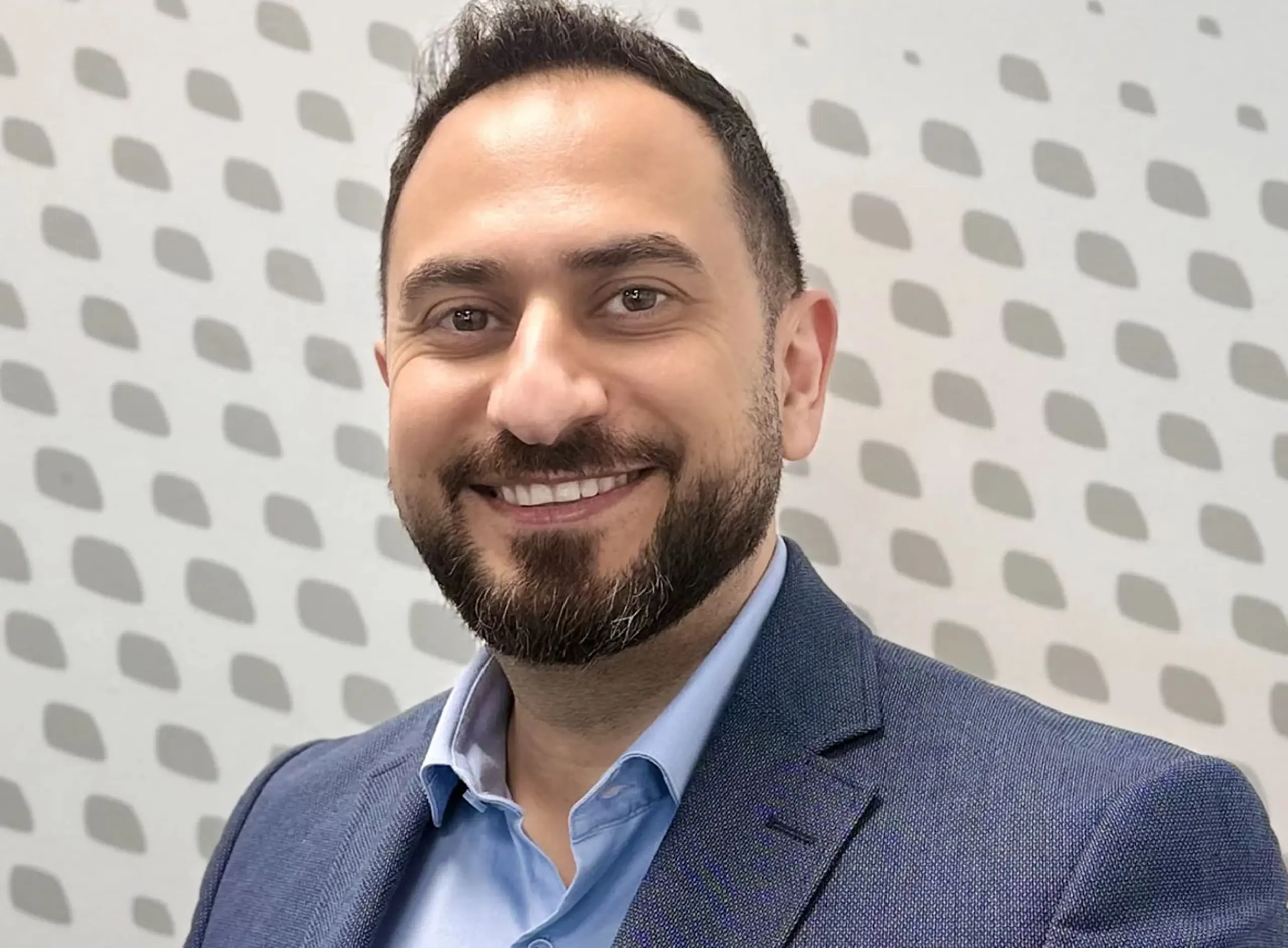
Cybersecurity leaders often arrive in the field through a mix of curiosity, persistence, and a desire to understand how complex systems fit together. For Bernard Assaf, that spark began early—long before “cybersecurity” became a defined career path. Today, after nearly two decades in the field, Bernard serves as Regional CISO for Airbus in Dubai, where he oversees security strategy, governance, risk, compliance, and cyber operations across a dynamic and high-stakes region.
Bernard’s path has taken him from Lebanon to Canada to the United Arab Emirates, from academia to global industry, and from early information assurance work to modern cybersecurity leadership. Along the way, he has remained deeply committed to continuous learning. That commitment led him to the SANS Technology Institute, where he completed the Graduate Certificate in Cybersecurity Leadership program with a perfect GPA.
What follows is a conversation with Bernard about his career, his experience at SANS.edu, and the mindset that has carried him through nearly 20 years in cybersecurity.
Learn more about the Graduate Certificate in Cybersecurity Leadership.
“The graduate certificate program was the perfect fit—high-impact, rigorous, and achievable with my schedule.”
How did you first become interested in cybersecurity?
I’ve always been fascinated by how things work—how systems connect, how logic flows, how a single click on a link or file can trigger an entire chain of events. Growing up, I loved discovering “hacks” and tricks. That curiosity eventually evolved into a professional passion. Back then, there wasn’t really a field called “cybersecurity,” so I started in information assurance and information security before the discipline matured into what it is today.
What is your current position, and what does it entail?
I’m the Regional CISO for Airbus, a cross-divisional role in the Middle East and Africa. I’ve been in this role for about two and a half years. My work focuses on implementing security strategy across the region, leading governance, risk, and compliance efforts, and overseeing cyber operations. Before Airbus, I served as the CISO for Siemens in Canada.
What do you enjoy most about working in cybersecurity?
Cybersecurity sits at the intersection of so many worlds—digital and physical, corporate, and governmental, personal, and professional. It’s endlessly fascinating. The mindset it requires—critical thinking, integrity, discipline, and the ability to solve problems across domains—keeps me engaged. You’re constantly linking the past, present, and future.
What was your educational background before enrolling at SANS.edu?
I have a BA in Computer Engineering from the Lebanese American University. After that, I earned many cybersecurity certifications, mostly from SANS. I also studied at Georgetown University’s Qatar campus while working in academia there, which brought me closer to higher education and management.
How did you first hear about SANS Technology Institute?
I first heard about SANS while working at Georgetown. A colleague responsible for information assurance introduced me to information security and recommended a SANS course. That was all it took—I was hooked, and the rest is history. After working with SANS, I was pleased when the SANS Technology Institute was founded and quickly saw myself as a future student.
Why did you choose the Cybersecurity Leadership graduate certificate program?
I originally wanted to pursue a full master’s degree, but the timing wasn’t right. Balancing work, life, and a long academic program wasn’t feasible for me at that time. The graduate certificate program was the perfect fit—high-impact, rigorous, and achievable with my schedule. I still hope to pursue a master’s degree in the future.
From your research, how did SANS programs differ from others?
SANS courses are far more technical and practitioner-led. Many other programs are heavily theoretical. I value that SANS instructors come directly from industry—they bring real-world experience and energy into the classroom. SANS certifications are also highly respected. When I’m hiring, I can immediately recognize the difference in candidates who have SANS training. People in the cybersecurity community know the value; they know it’s not something you can fake.
What did you find most valuable about the program?
The same things that drew me to SANS in the first place: the technical depth, the practical focus, and the quality of the instructors. The courses give you tools you can use immediately.
Did you take classes online or at live events? How was that experience?
I took my classes online. I had planned to attend two live events, but work and travel made it difficult. The OnDemand format was extremely convenient—I could learn at my own pace and schedule exams when it worked for me. I’ve attended live SANS events in the past, and they’re fantastic. The only thing you miss online is the networking and the energy of being in the room with other professionals. But the quality of the training is the same.
How was your experience with student advising at SANS.edu?
Shawna Rogers was amazing. She helped me through the entire program. Whenever an issue came up, she jumped on it immediately. She was always the first to celebrate my successes and made the whole process smooth.
What advice would you give someone considering applying to SANS Technology Institute?
Keep trying until it happens. You may face challenges with timing or finances, but eventually the stars align. Go for it. Focus on building a solid foundation from the courses and be prepared for the exams.
What’s next for you?
Right now, I’m taking a short break to let my mind rest. In the future, I want to dive deeper into cybersecurity leadership. And I have little doubt that I will enroll in future SANS.edu courses. That’s the next step for me.